

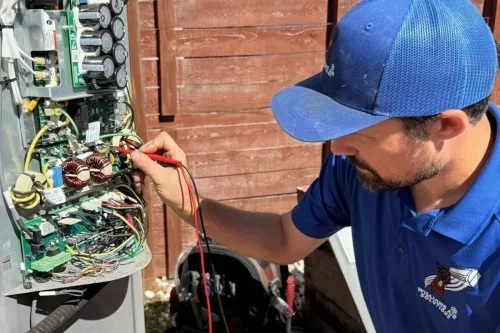
If your electric bill jumped and nothing else changed — same house, same habits, same rate — the air conditioner is the most likely reason. In a Florida home, the AC accounts for 40 to 60 percent of total electricity use during the cooling season.
Causes that cost money every month
Dirty air filter. A restricted filter forces the blower motor to work harder and the system to run longer to reach the set temperature. A filter that should have been replaced two months ago can add 5 to 15 percent to your cooling costs. Replace it. This is the single cheapest thing you can do.
Dirty condenser coil. The outdoor unit rejects heat through its aluminum fins. When those fins are coated with dirt, pollen, grass clippings, or pet hair, heat transfer drops and the compressor runs longer. Rinse the coil with a garden hose from the inside out once or twice per cooling season.
Duct leaks. If 20 to 30 percent of your cooled air is leaking into the attic through gaps in the ductwork, the system runs 20 to 30 percent longer to compensate. You pay for air conditioning your attic. Duct sealing is one of the highest-return efficiency improvements you can make.
Refrigerant leak. A slow leak reduces system capacity gradually. The compressor runs longer to do less work. Your electric bill rises over weeks or months. If the house is also getting harder to cool, this is a likely cause.
Aging system. AC efficiency degrades over time. A 15-year-old system running on R-22 refrigerant is significantly less efficient than when it was installed, even if it has been well maintained. At some point, the monthly energy penalty of the old system exceeds the cost of financing a new one.
Thermostat set too low. Every degree below 78 increases cooling costs by roughly 3 to 5 percent. A household argument about the thermostat at 72 versus 78 is a 20 percent difference in your cooling bill. A programmable or smart thermostat that raises the temperature when no one is home closes this gap without discomfort.
What to do
Start with the filter and the condenser coil — both are free or nearly free. If the bill stays high after those, schedule a maintenance visit. A technician can measure refrigerant pressures, check duct leakage, and assess whether the system is running efficiently. If the system is older than 15 years and the bills keep climbing, it is worth getting a replacement estimate to compare against the ongoing energy cost.
Call (727) 477-3256 to schedule a maintenance visit or a system evaluation.