

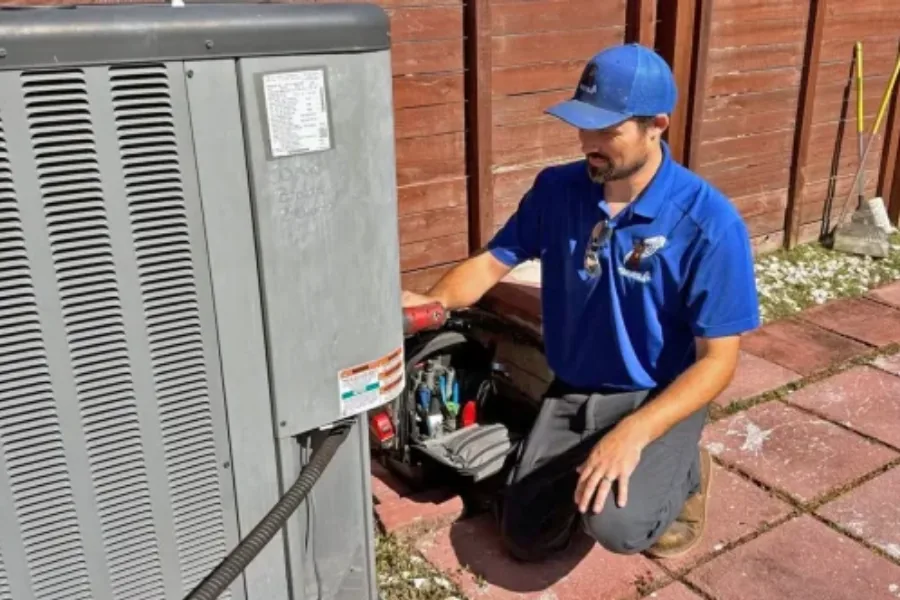
If you see ice on the copper refrigerant line, frost on the evaporator coil, or the system is barely cooling with reduced airflow, the coil is frozen. Here is how to thaw it.
Step by step
-
Turn the thermostat to "off." Stop the compressor from running. Running a compressor with a frozen coil can send liquid refrigerant back to the compressor and damage it.
-
Set the fan to "on." This keeps the blower running, pushing room-temperature air across the frozen coil. The warm air speeds the thaw.
-
Wait. A moderately frosted coil takes one to two hours. A fully iced-over coil can take three to four hours. Do not rush it.
-
Do not chip the ice. The evaporator coil fins are thin aluminum. Chipping or scraping ice off them bends and damages the fins, which permanently reduces airflow and heat transfer.
-
Place towels or a pan under the unit. As the ice melts, more water than normal flows into the drain pan. If the pan is small or the drain line is slow, water may overflow. Towels catch it.
-
While you wait, replace the air filter. A dirty filter is the most common cause of a frozen coil. If the filter is clogged, that is likely why the coil froze.
-
After the coil is fully thawed, switch the thermostat back to "cool." Monitor the system for the next 24 hours. If the coil freezes again, the cause is not the filter — it is likely low refrigerant, a dirty coil, or a blower motor issue. Call a technician.
What not to do
Do not use a hair dryer, heat gun, or hot water on the coil. Rapid, uneven heating can stress the copper tubes and the solder joints. Room-temperature air from the blower is the correct method.
Do not restart the system before the coil is fully thawed. Partial thaw plus restart equals immediate refreeze.
Call (727) 477-3256 if the coil refreezes after you restart with a clean filter.