

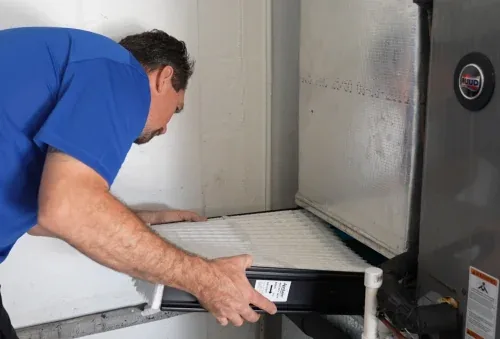
The packaging says every 90 days. That number is based on average conditions — moderate humidity, moderate use, no pets. Florida is not average conditions.
Why Florida is different
Your AC runs 8 to 12 months a year. In the summer, it runs most of the day. More hours of operation means more air passing through the filter, more dust and pollen captured, and faster buildup. Add Florida's humidity (which makes dust stick instead of passing through) and the 90-day interval is optimistic.
Realistic intervals
Every 30 days: Homes with pets (especially dogs that shed), homes with smokers, homes near construction, homes with allergy or asthma sufferers, or during peak summer when the system runs 14 to 18 hours a day.
Every 45 to 60 days: Most Florida homes without the factors above. This is the practical default for Pinellas County.
Every 90 days: Possible in winter months when the system runs intermittently, or in homes with a 4-inch or 5-inch deep media filter (these have more surface area and last longer by design).
How to tell without counting days
Pull the filter out and hold it up to a light source. If you can see light through the media, it has life left. If it looks solid gray and no light passes through, replace it regardless of how long it has been.
Check the backside (the downstream face, where air exits). If you see a layer of dust on the surface, the filter is working but nearing capacity. If the pleats are matted flat with debris, it is overdue.
What happens if you wait too long
A clogged filter restricts airflow. The evaporator coil gets too cold and can freeze. The blower motor works harder and draws more electricity. The system runs longer to reach the set temperature. In the worst case, the high-limit safety switch shuts the system down to prevent damage.
A $5 filter replaced on time prevents a $200 service call. Set a phone reminder.